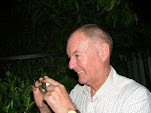
Thursday, 5 October 2017

Another Day Of Rain,

so we did not go out until the evening,


 then it was glad rags on,

 and We were off with Mr. Tony to Cherry's, for their 450 baht International buffet which is every Wednesday and Saturday evening, 

plenty of starters on offer,

 including sushi,

 soup of the day asparagus,

 18 or so heated covered dishes to chose from,

 plus a pizza station and a carvery, 

on to desserts,

 and what a selection, 

 plus 7 flavours of ice cream,

 so off to chose our starters,

 all set,

 and I am up for a second selection,

 Diana's main course,

 'Cheers!',

we finished with a selection of deserts, for Myself, a creme caramel and a raspberry delight, the restaurant is situated on Third Road opposite what was once the X-Cite disco, after the meal Mr. Tony dropped us off home, We said our farewells, then it was feet up for a couple of quiz shows, a couple from Billions, then next for us We were off to bed.


One Of The Many Great Things About Japan Is Vandalism,

that is the lack of it,


 which means amongst other things that Japan has the highest penetration of vending machines per person (there’s roughly 1 vending machine for every 23 people in Japan) and the fact that the majority of them are outdoors is a testament to the country’s safety and respect for property, very rarely are these machines ever vandalised, 

 outdoor vending machines, especially the ones in remote locations, and some buried in snowfall, became not only a photographic subject for Eiji Ohashi, but also a welcome oasis from the harsh winters of Hokkaido, where the deep snows can become more than a little bit of a problem, “but even then I can get warm drinks from the vending machines. When I hold a warm bottle that I buy from the vending machine, my feelings relax.”

 “In Hokkaido where I live, winters are harsh and snows are deep,” says Eiji “Every day can become rather inconvenient” due to the constant snowfall, but heavy snows also bring wintry wonderlands and the discovery of small pleasures,

 a collection of black & white photographs by Ohashi are available as a photobook

 You can also see more of his work online

and no I am not on commission, I just thought His photographs just looked so nice, and different.


I Do Like Unusual Buildings,

and this one is pretty unusual,


it is a music complex near Paris, featuring an egg-shaped auditorium and a wall of solar panels that move to follow the path of the sun, the Japanese architect's Paris-based office won an international competition held in 2013 to design La Seine Musicalea, a musical facility comprising a large multipurpose venue and a smaller auditorium, it was designed by PritzkerPrize-winning architect Shigeru Ban, Shigeru Ban Architects who collaborated with local architect Jean de Gastines on the the complex, which is located on the Ile Seguin between the Boulogne-Billancourt and Sèvres neighbourhoods in the French capital's western suburbs,

 the heart of the building is the Grand Seine multi-purpose hall, a 6,000-seat venue for events including concerts, musicals and ballets, there is also a smaller performance space for 1,150 people, which is home to the Insula Orchestra, and intended as a venue for classical concerts not requiring amplification, the ovoid structure's latticed laminated-timber frame is sheathed in glazing and sheltered from direct sunlight by a sail-like surface covered with photovoltaic cells, the triangular sail is mounted on rails that allow it to follow the path of the sun, therefore increasing its efficiency and ensuring the lobby behind is shaded throughout the day,

 "The form of the solar panel is inspired by a sail, so we can compare La Seine Musicale to a sailing ship," said the firm in a statement. "This environmentally friendly 'ship' will ultimately make a new symbol for the west gate of Paris." 

 the interior of the auditorium is designed to create a warm and intimate atmosphere, with seating encircling a central stage area, acoustic panels made from wood and paper tubes are suspended from the ceiling to enhance the concert experience,

 for most of the 20th century, the La Seine Musicale site was occupied by a manufacturing plant operated by car brand Renault, when Renault ceased activity at the facility in 1992, the buildings were left unused, before eventually being demolished in 2005,

the masterplan has since undergone several revisions, as ownership has changed over the years, the opening of La Seine Musicale marks the first completed cultural venue on the island, La Seine Musicale occupies around a third of the island at its western tip, in keeping with Nouvel's original plan for Ile Seguin, a concrete wall wraps around the building's perimeter, evoking the industrial aesthetic of the former factory,


the photography is by Didier Boy de la Tour, as I said, what an unusual building.


Whilst Making A Post Yesterday,

about Buster Keaton and early cinema,


I came across the amazing story of W. Frank Brinton, so why is Brinton involved and connected with films? in the southern and eastern part of Iowa sits the town of Washington, population 7,424, Washington’s State Theatre, formerly an opera house, showed its first motion picture to an astounded crowd on May 14, 1897, making it, according to the Guinness Book of World Records, “the oldest continuously operating cinema theatre in the world.” between the end of the Civil War and the Great Crash of 1929, tens of thousands of “opera houses” were built across the country, including hundreds in the state of Iowa alone, rather than staging full-blown operas, they mostly served as community cultural centres where local groups and guilds could convene and travelling actors, singers, orators, musicians, magicians and the like could stage a show, Washington’s State Theatre was one of the earliest to show motion pictures on a regular basis, this was almost entirely due to the brilliant and enterprising W. Frank Brinton, and a film has been made of the man who saved the films and memorabilia that Brinton had collected, titled Saving Brinton

in 1897, Frank and his wife, Indiana, transformed Washington’s opera house into a thriving cinema where films played to sold-out houses, their success was so great that they decided to take it on the road, the Brinton Entertainment Co. travelled from Minnesota to Texas projecting light through hundreds of early films from as far away as Europe and the Middle East, as well as hand-painted “magic lantern slides,” dazzling audiences who had never seen such wonders, local and travelling musicians were hired to accompany the films, making them anything but silent, and by all accounts, they were a great success, at the height of their business, such shows could bring in more than $100 a day, about $2,500 in 2017 dollars, Frank died in 1919 and eventually the entire Brinton collection, including the early films, hundreds of slides, catalogues, handbills, ledgers, posters and the original hand-cranked projector used by Frank and Indiana, was locked away in an Iowa basement, forgotten to the world,

enter Michael Zahs, a gentle man with a long, wispy beard, now in his 70s with the air and appearance of a latter-day Walt Whitman, Zahs, who calls himself a “saver” rather than a “collector,” discovered the Brinton collection at an estate sale back in 1981, much of it in boxes labelled “Brinton crap.” despite the labelling, he immediately recognised the artistic and historical significance of the collection, and that was the problem, it was a big collection and needed a lot of room, much to his wife’s dismay, He knew He had to find a curator and spread the word to film historians and museums, His search ended a few years ago, when curators at the University of Iowa Libraries learned of the collection, one of Zahs’ stipulations was that the entire Brinton collection remain the property of the people of Iowa, in 2014, that stipulation was agreed upon, and Zahs gifted the entire collection to the University of Iowa Libraries, Special Collections, where it is being catalogued, preserved and digitised, and will eventually be available in its entirety for public viewing and scholarly research, throughout Saving Brinton, which took 4 years to produce, the documentarians highlight the painstaking process of restoring these films; the results are spectacular, among the 130 films are early masterpieces by Auguste and Louis Lumière, Ferdinand Zecca, and Segundo de Chomón, many of them meticulously hand-painted, frame by frame, in brilliant colours, 

but by far the greatest find has been the two lost Méliès films: The Triple-Headed Lady (1901) and The Wonderful Rose Tree (1904), both are stunning examples of Méliès surreal narratives and use of stop-action to create some of the first “special effects.” the earlier Méliès film features prominently in Saving Brinton, but the latter, The Wonderful Rose Tree was restored so recently that it didn’t make the final cut of the documentary and so will have its world premiere in a few days time on Oct. 7 at the Pordenone Silent Film Festival in Italy, above is a short trailer for the film, Saving Brinton,

and amongst the collection I found this, other than it being shot in Thailand I could not find any other details of it, also I should say that most of the film from the middle to a few frames at the end have degraded so much, I am guessing they can not be restored, but it goes to show the breath of the Brinton archive, what a wonderful find, not about the money, but pure film history.


Wednesday, 4 October 2017

We Had Planned To Go Out,

but the rain just did not let off, 


 so we stayed indoors, Diana did some tiding up, I just watched the television and played with a few infrared images, above is a infrared picture of a local temple that I played with by colour swapping, 

and by using various programs, I can give a picture a black and white dynamic look,

 or a faded antique look, 

 or make a totally wild picture,

 here is an antique take of one temple,

the same picture made to look totally different, all of these temples are around Pattaya, if You like this type of photography our infrared blog is here, the camera I use is a Lumix DMC GX8 with 12-60mm lens, I had the camera converted to take infrared pictures at Protech Photographic in Uckfield, Sussex, UK. who were more than very helpful, and no I am not on commission, it is just that when arranging to have My camera converted they were more than very helpful,

after our evening meal and a few game shows, a real treat for the late evening, the return of Billions, a new series is being shown on Netflix, it is just so good, the best way I can described it that that You are cheering for the bad guy for all of the good reasons, or You are cheering for the good guy for all of the bad reasons, difficult to explain but such delicious fun to watch! as the midnight hour came and went we were finally off to bed.


If There Is One Comedy Actor,

that stands head and shoulders above all others,


it has got to be in My opinion Buster Keaton, widely celebrated for doing many of His own stunts, a long lost one had come to light,

it is a take on the old myth that if You dig a hole You will end up in China,

in this clip from His film Hard Luck He does just that, falling through to China to return a few years later with His Chinese family, the film was lost for many years until it was partially reconstructed in 1987- without the pool scene, that part was finally found in a Russian archive years later and here it is above, 

here is the full film made in 1921, or if you want just to see some of His amazing stunts and funnies,

 this short compilation is for You, what a truly talented comedy actor.


At First Glance,

the the LG K7i 


 is very similar to the K8 smartphone launched last year, it has a 5-inch display with 854x480 pixel resolution, a 1.1 GHz quad-core processor with 2GB RAM and 16GB internal storage with microSD card support, the dual SIM smartphone has an 8-megapixel rear camera and a 5-megapixel front camera, it runs on Android 6.0 Marshmallow, it has a fingerprint sensor and a 2500mAh battery, so what is so special about the LG K7i? it is the bulge on the back of the telephone that makes stand out from all other telephones in the world,

it is the worlds first mosquito repelling smartphone, which uses ultrasonic sound waves to keep the disease carriers away,

by changing the back of the telephone it will emit sound-waves that keeps mosquitoes away, this has been disputed by some companies, but LG claims that its Mosquito Away technology has passed multiple tests and has been certified by India’s International Institute of Biotechnology and Toxicology, the company adds that its new K7i smartphone managed to repel 72% of mosquitoes during testing,

and here is a short video of the features of the telephone, all of this comes at a price of Rs 7,990, but at the moment it is only available in India, with Indians spending over $700 millions on home insecticides every year, the LG K7i mosquito-repelling phone is set to become a success, and I guess if it is a success and lives up to its claims it will eventually be available in countries like Indonesia and Thailand, also I guess a number of other telephone companies instead of mocking it will be scrambling to produce their own mosquito repelling telephones! and no I am not on commission, but I would like a mosquito repelling telephone, well it makes so much sense, it is silent when repelling and keeps them at bay wherever you are.