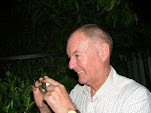
Glen catching up on his e-mails,
 baby Casey,
 Mae, Casey and Diana, once they have settled in we will be out for a few beers, no change there then!
baby Casey,
Mae, Casey and Diana, once they have settled in we will be out for a few beers, no change there then!
Mae, Casey and Diana, once they have settled in we will be out for a few beers, no change there then!
baby Casey,
Mae, Casey and Diana, once they have settled in we will be out for a few beers, no change there then!
 Members of Holyrood‘s Public Petitions Committee will discuss the petition, which urges ministers to consider the case of Helen Duncan.
She was the last person convicted under the 1735 Witchcraft Act and spent nine months in Holloway prison after a trial in 1944.
Mrs Duncan was convicted following a seance at which the spirit of a dead sailor was said to have disclosed the loss of the battleship HMS Barham with most of her crew.
The sinking had been kept secret by the authorities to maintain wartime morale, and was not disclosed for several months.
A petition to the Westminster Government last year failed to secure a pardon, and the new petition, by paranormal group Full Moon Investigations, calls for the Home Secretary to reconsider the case.
A statement from Full Moon Investigations described Mrs Duncan as being “an ordinary Scottish housewife who found herself in the centre of a WWII legal battle which ended with her conviction of a ‘crime‘ under Britain‘s ancient Witchcraft Act and jailed for nine months”.
The Witchcraft Act was repealed by the Fraudulent Mediums Act of 1951.
Scottish Parliament researchers said it was a common misconception that Mrs Duncan was convicted of being a witch.
“In fact, the 1735 Witchcraft Act was originally formulated to eradicate the belief in witches and its introduction meant that from 1735 onwards an individual could no longer be tried as a witch,” said their research paper.
“It was, however, possible to be prosecuted for pretending ‘to exercise or use any kind of witchcraft, sorcery, enchantment or conjuration, or undertake to tell fortunes‘.
“Supposed contact with spirits fell into this category.”
Members of Holyrood‘s Public Petitions Committee will discuss the petition, which urges ministers to consider the case of Helen Duncan.
She was the last person convicted under the 1735 Witchcraft Act and spent nine months in Holloway prison after a trial in 1944.
Mrs Duncan was convicted following a seance at which the spirit of a dead sailor was said to have disclosed the loss of the battleship HMS Barham with most of her crew.
The sinking had been kept secret by the authorities to maintain wartime morale, and was not disclosed for several months.
A petition to the Westminster Government last year failed to secure a pardon, and the new petition, by paranormal group Full Moon Investigations, calls for the Home Secretary to reconsider the case.
A statement from Full Moon Investigations described Mrs Duncan as being “an ordinary Scottish housewife who found herself in the centre of a WWII legal battle which ended with her conviction of a ‘crime‘ under Britain‘s ancient Witchcraft Act and jailed for nine months”.
The Witchcraft Act was repealed by the Fraudulent Mediums Act of 1951.
Scottish Parliament researchers said it was a common misconception that Mrs Duncan was convicted of being a witch.
“In fact, the 1735 Witchcraft Act was originally formulated to eradicate the belief in witches and its introduction meant that from 1735 onwards an individual could no longer be tried as a witch,” said their research paper.
“It was, however, possible to be prosecuted for pretending ‘to exercise or use any kind of witchcraft, sorcery, enchantment or conjuration, or undertake to tell fortunes‘.
“Supposed contact with spirits fell into this category.”

 clock before the quick fix,
clock after the quick fix, notice the $ sign has a 1 in it.
 A RACE row has erupted in a picture-postcard Dorset village after an Enid Blyton shop started selling golliwogs.
The owner of the Ginger Pop shop – a shrine to the children's author who lived nearby – has received complaints branding her a racist and urging her to stop selling the rag dolls.
Viv Endecott insists the golliwogs are harmless soft toys synonymous with Enid Blyton who regularly featured them in her famous books, including Noddy.
In recent years the golliwogs have been "cleansed" from the novels as many people began to see them as a crude racial stereotype.
But Miss Endecott claims there is demand for the toys in the Dorset village of Corfe Castle – immortalised in the Famous Five books.
She said she has sold more than 500 in the last six months to customers of varying ages and ethnic backgrounds.
The 47-year-old said despite the complaints she will continue to sell the dolls alongside the Blyton books, teddy bears and bottles of ginger beer.
Miss Endecott said: "The note had been pushed under the door one night. I felt annoyed, mainly because whoever wrote it didn't put their name to it.
"I thought the best way to gauge people's reaction to it was to place the note in the window alongside some golliwogs and the general reaction has been 'is that for real?' "Around here it is accepted that a golliwog is a soft toy associated with Enid Blyton. I genuinely think most people don't associate them with black people.
"No offence has ever been intended by me and therefore none should be taken.
"My customers aren't members of the BNP or the National Front. They don't cuddle golliwogs and turn into racist bigots, who we all detest."
Miss Endecott, who is of Indian origin and suffered racism as a child, added: "There is plenty of real racism to get worked up about than to argue over the merits of a soft toy.
"I suffered real racism at school so I don't need any lessons on it."
The golliwog first appeared in a children's story by the writer Florence Kate Upton and was popularised in Britain when jam manufacturer Robertsons adopted it as a symbol for its products in 1910.
A RACE row has erupted in a picture-postcard Dorset village after an Enid Blyton shop started selling golliwogs.
The owner of the Ginger Pop shop – a shrine to the children's author who lived nearby – has received complaints branding her a racist and urging her to stop selling the rag dolls.
Viv Endecott insists the golliwogs are harmless soft toys synonymous with Enid Blyton who regularly featured them in her famous books, including Noddy.
In recent years the golliwogs have been "cleansed" from the novels as many people began to see them as a crude racial stereotype.
But Miss Endecott claims there is demand for the toys in the Dorset village of Corfe Castle – immortalised in the Famous Five books.
She said she has sold more than 500 in the last six months to customers of varying ages and ethnic backgrounds.
The 47-year-old said despite the complaints she will continue to sell the dolls alongside the Blyton books, teddy bears and bottles of ginger beer.
Miss Endecott said: "The note had been pushed under the door one night. I felt annoyed, mainly because whoever wrote it didn't put their name to it.
"I thought the best way to gauge people's reaction to it was to place the note in the window alongside some golliwogs and the general reaction has been 'is that for real?' "Around here it is accepted that a golliwog is a soft toy associated with Enid Blyton. I genuinely think most people don't associate them with black people.
"No offence has ever been intended by me and therefore none should be taken.
"My customers aren't members of the BNP or the National Front. They don't cuddle golliwogs and turn into racist bigots, who we all detest."
Miss Endecott, who is of Indian origin and suffered racism as a child, added: "There is plenty of real racism to get worked up about than to argue over the merits of a soft toy.
"I suffered real racism at school so I don't need any lessons on it."
The golliwog first appeared in a children's story by the writer Florence Kate Upton and was popularised in Britain when jam manufacturer Robertsons adopted it as a symbol for its products in 1910.
 at this stage Diana thought I was joking when I said I had to have make up for Halloween,


 and now the finished result,
 just as I was finished Jeff called,
 Grieg the manager at Sisterz,
 scary dairy!
 outside Sisterz,
 close up,
 I wanted a yellow hooded coat, but they were only available in blue,
 Grieg did a great job of carving pumpkins, the first one took him over 3 hours to do,
 they look even better with the candles lite,
 really scary!
 then home for a night cap,
 my "best side"
 oh dear full face! another great night out made all the better by Tom's efforts at Sisterz, the shows were different and most enjoyable, I think we should have a Halloween every year just like Christmas.
  These astonishing scenes are the aftermath of a deluge of hailstones that buried a town in a river of ice.
Ottery St Mary, in Devon, was plunged into chaos by the storm in the early hours yesterday.
First, the area was battered by an astonishing 12in of hail in just two hours. This blocked drains, which led to widespread flooding as the rain began to fall.
These astonishing scenes are the aftermath of a deluge of hailstones that buried a town in a river of ice.
Ottery St Mary, in Devon, was plunged into chaos by the storm in the early hours yesterday.
First, the area was battered by an astonishing 12in of hail in just two hours. This blocked drains, which led to widespread flooding as the rain began to fall.
 More than 100 people had to be evacuated from their homes and 25 were airlifted to safety or rescued by firefighters.
After a day of heavy rain on Wednesday more than three inches of rain and hail fell between 6pm and 8am yesterday morning.
The Met Office said the 'hugely localised' weather system was less than 4 miles across and seemed ' to be centred on Ottery St Mary'.
The most severe weather hit just after midnight on Thursday but by 5am the entire town was cut off and coastguards scrambled helicopters to airlift residents.
More than 100 people had to be evacuated from their homes and 25 were airlifted to safety or rescued by firefighters.
After a day of heavy rain on Wednesday more than three inches of rain and hail fell between 6pm and 8am yesterday morning.
The Met Office said the 'hugely localised' weather system was less than 4 miles across and seemed ' to be centred on Ottery St Mary'.
The most severe weather hit just after midnight on Thursday but by 5am the entire town was cut off and coastguards scrambled helicopters to airlift residents.
 Emergency services were inundated with calls from terrified home owners who watched helplessly as flood water rose to 5ft high in some places, and there were fears that hundreds of animals may have been killed in the floods.
Residents in Ottery St Mary said the town was unrecognisable after the hail storm..
Sarah Galliford said: 'I was woken up by the sound of hailstones thundering down on the roof. I thought it was the end of the world. I looked outside at about 1am and there was a river of ice coming down the street. It was a total freak of nature. It wasn't even on the weather forecast. They said there would be rain but nothing like this. It was absolutely crazy.'
Clara Pedmore added: 'There is 2ft 6ins of water on the road. I can't get out of the house.One farm nearby has lost about 500 sheep which were out in fields which are now completely underwater.'
Emergency crews also sent in jeeps and fire appliances and boats to take residents to an evacuation centre at the local hospital.
Emergency services were inundated with calls from terrified home owners who watched helplessly as flood water rose to 5ft high in some places, and there were fears that hundreds of animals may have been killed in the floods.
Residents in Ottery St Mary said the town was unrecognisable after the hail storm..
Sarah Galliford said: 'I was woken up by the sound of hailstones thundering down on the roof. I thought it was the end of the world. I looked outside at about 1am and there was a river of ice coming down the street. It was a total freak of nature. It wasn't even on the weather forecast. They said there would be rain but nothing like this. It was absolutely crazy.'
Clara Pedmore added: 'There is 2ft 6ins of water on the road. I can't get out of the house.One farm nearby has lost about 500 sheep which were out in fields which are now completely underwater.'
Emergency crews also sent in jeeps and fire appliances and boats to take residents to an evacuation centre at the local hospital.

map shows the location of Ottery St Mary, near Exeter in Devon.